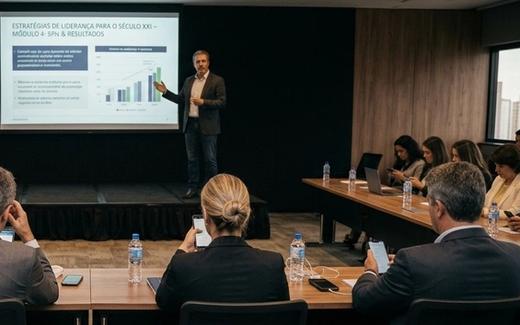
Internal mentoring: how to amplify your programme's potential
Does your company already have an internal mentoring programme up and running? It is likely the result of significant effort from the HR and L&D professional: engaging leaders to be mentors and mentees, training mentors, matching mentor and mentee, measuring results. In this article, I want to show you how it is possible to scale your internal mentoring programme and accelerate the development of your leaders and teams.
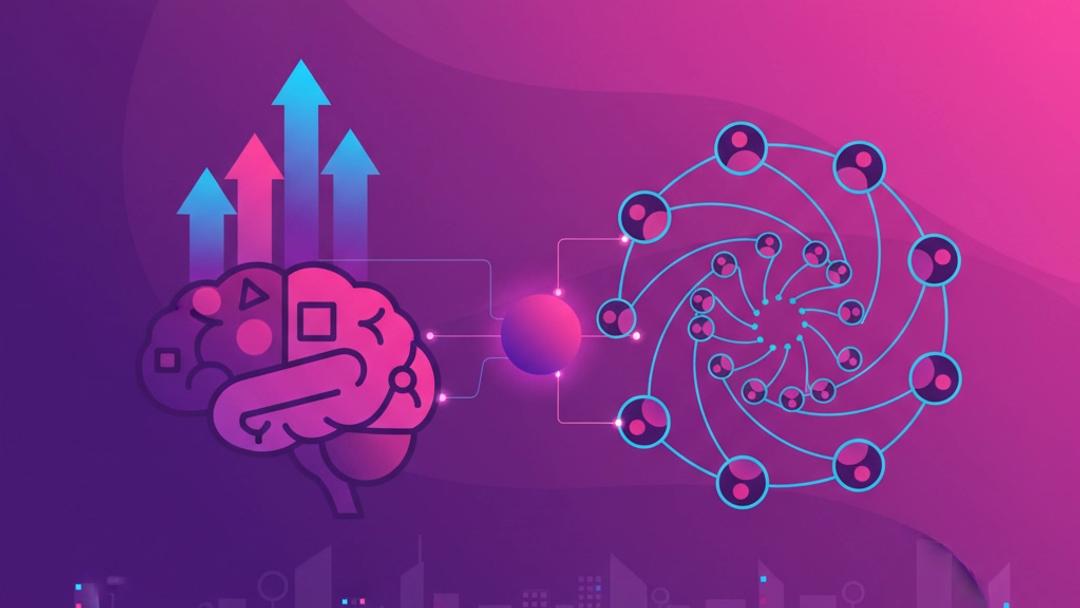
- An internal mentoring programme has natural limits to scale
- Too few leader-mentors for too many mentees
- Amplify without replacing: internal, external and AI
- mentorIA provides continuous support between touchpoints
- Data reveals recurring gaps and where to reinforce
- Gradual rollout: diagnostic, pilot and expansion
Does your company already have an internal mentoring programme up and running? It is likely the result of significant effort from the HR and L&D professional: engaging leaders to be mentors and mentees, training mentors, matching mentor and mentee, measuring results. In this article, I want to show you how it is possible to scale your internal mentoring programme and accelerate the development of your leaders and teams.
Next, I want to show you how it is possible to amplify the results of your mentoring programme with a robust learning development ecosystem.
The current scenario: internal mentoring as a solid foundation
When a company has already structured its internal mentoring programme, it means it has already created a culture of continuous leadership development and understands that technically and behaviourally well-prepared leaders will be able to conduct engaged and high-performance teams.
However, internal programmes face natural limitations:
– Not every senior leader wants to be a mentor,
– The number of leader-mentors may not be sufficient to meet the number of leader-mentees,
– Acting as both leader and mentor can create work overload and difficulty prioritising results.
– And it may be difficult to structure solid and continuous training for leader-mentors, so that development generates positive business impact.
Amplify without replacing, complementing
The secret lies in adding to the internal structure you have already built the expertise of professionals specialised in formatting and delivering leadership mentoring programmes.
Think of three layers of development:
1: Internal mentoring programme – maintains organisational knowledge, culture and business-specific contextualisation.
2: Specialised external mentoring – brings external perspectives – leadership benchmarking from the market, validated methodologies and expertise focused on specific gaps.
3: Intelligent technology – provides personalisation at scale, 24/7 support with Artificial Intelligence and progress measurement.
The differentiator of Human + AI integration
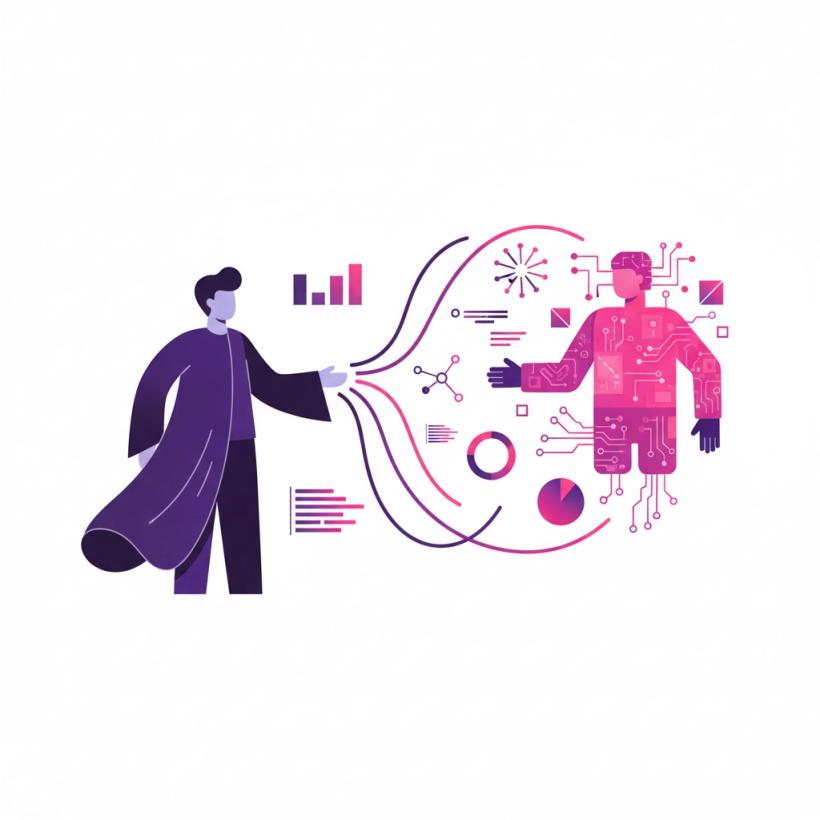
Whilst your internal mentoring covers cultural and strategic aspects, the combination of experienced external mentors with artificial intelligence creates continuous support that accelerates behavioural change in leaders and business results.
The mentorIA, Upskill's virtualised mentor with AI, for example, does not replace human conversations, but provides support between sessions. When a leader has a question about how to apply a learning from internal mentoring, they can instantly consult a virtualised mentor available 24/7.
This integration generates valuable data: you identify which topics generate the most questions, which leaders need additional support, and where your internal mentoring can be strengthened.
Complementary solutions for different needs
To build a robust ecosystem of behavioural learning for leadership, you can add:
Group mentoring for leaders and teams
Imagine that your internal mentoring identified common gaps in 'change management' in several leaders. Specialised group mentoring can address this specific topic, creating space for peer exchange among leaders in the same company, but with specialised external facilitation.
Thematic workshops tailored to your needs
When your internal mentoring identifies specific needs affecting many leaders simultaneously, customised workshops accelerate collective development. Topics such as 'assertive communication in times of change' or 'how to lead transformation with AI' can be addressed in an immersive and practical way.
Training of internal mentors
Here is an often overlooked opportunity: improving the quality of your internal mentors. Mentor training programmes elevate the quality of leadership mentoring delivery, teaching advanced coaching techniques, constructive feedback and behavioural development methodologies.
Practical cases of amplification
Situation 1: A technology company had a robust internal programme, but leaders from different areas faced similar challenges in managing remote teams. They maintained internal mentoring for strategic aspects and added monthly group mentoring on remote leadership, with mentorIA for continuous support.
Result: 35% improvement in remote team engagement, while maintaining the benefits of internal mentoring.
Situation 2: An industry identified that its internal mentors were excellent in technical knowledge, but had gaps in behavioural development tools. They invested in mentor training and added 1:1 external mentoring to solve more complex cases.
Result: Quality of internal mentoring improved by 40%, and complex cases now have more effective resolution.
Diagnosis: Identifying amplification opportunities
Before adding any solution, it is essential to diagnose where the greatest opportunities lie. Some guiding questions:
- What gaps can your internal mentoring not completely cover?
- Are there recurring topics that could be addressed more speculatively?
- Do your internal mentors feel prepared for all the challenges they face?
- How to measure if development is generating real impact on performance?
Personalisation at scale
One of the biggest challenges of internal programmes is personalising development for different leader profiles and having a sufficient number of leader-mentors to meet demand. A C-level executive has different needs from a first-line leader, and both are different from a potential leader.
The combination of detailed diagnoses with personalised plans solves this issue. Each leader receives a plan that complements their internal mentoring with solutions specific to their profile and career stage.
Measuring impact: Beyond engagement
Internal programmes often measure engagement and satisfaction. Specialised adjacent solutions offer deeper metrics:
- Progress in specific skills
- Real application of learning in day-to-day work
- Impact on individual and team performance
- ROI on development
This data not only validates the investment, but guides adjustments to both the internal programme and complementary solutions.
Gradual implementation: The safest path
It is not necessary to implement all solutions simultaneously. A gradual approach allows you to validate impact and adjust as needed, one phase at a time:
1: Detailed diagnosis of the current programme and identification of gaps
2: Pilot with a specific solution (e.g. mentorIA for 24/7 support)
3: Expansion based on results and identified needs
4: Full integration with consolidated measurement
Preparing for 2026
The development landscape is evolving rapidly. Leaders will need different skills, more diverse learning formats, and personalisation as a differentiator.
Companies that already have a solid foundation in internal mentoring are in a privileged position to integrate these trends. The question is to do so strategically, preserving what works and amplifying results.
Next steps
If your company has already invested in internal mentoring and wants to amplify results, consider these practical actions:
- Carry out an honest diagnosis of the current programme
- Identify specific gaps that limit potential
- Explore adjacent solutions that complement (not replace) what exists
- Test on a small scale before expanding
- Measure impact more deeply than satisfaction
Leadership development in 2026 will not be about choosing between internal or external, but about creating integrated ecosystems that maximise the potential of each approach.
Your internal mentoring is a valuable asset. Now is the time to amplify this investment with solutions that elevate your results to the next level. How about discovering exactly where your greatest amplification opportunities are?
Want to identify how to amplify the results of your internal mentoring? Schedule a diagnosis tailored to your needs and discover which complementary solutions can elevate your L&D programme in 2026.
In this article:
- What it is: The article shows how companies that already have a structured internal mentoring programme can amplify their results, without replacing what already works. It proposes a leadership development ecosystem in three layers: internal mentoring, specialised external mentoring and intelligent technology with AI.
- Why it matters: Internal programmes face natural limitations, such as insufficient number of leader-mentors, overload for those who combine the roles of leader and mentor, and difficulty in training mentors continuously. Practical cases cited in the article show gains such as 35% improvement in remote team engagement and 40% improvement in the quality of internal mentoring after amplification.
- What to do: Carry out an honest diagnosis of the current programme and identify specific gaps that limit the potential. Next, explore complementary solutions (not substitutive), test on a small scale before expanding and measure the impact more deeply than just satisfaction.
Mentors and specialists in leadership development, with more than 20 years of practice mentoring executives and entrepreneurs.